
English banner

I am not separating for my children

I am not separating for my children

One of the most complex decisions we can face in life is ending a romantic relationship. This decision becomes even more complicated when there are children involved, as many people fear that divorce or separation could cause them irreparable harm. However, it is essential to understand the potential consequences, both for us and for our children, of continuing a romantic relationship in which we are not happy.

Emotional consequences for the children

The idea that staying in a dysfunctional relationship is the best way to protect the children is a myth that has persisted for a long time. This idea is understandable since not too long ago, it was not permitted for married couples to separate or divorce. Family unity used to be prioritized over the emotional well-being of family members. Fortunately, things are no longer this way, and now we have the option to separate whenever we want. Nevertheless, these myths about couples needing to stay together for the sake of the children still prevail in our society more than we think.

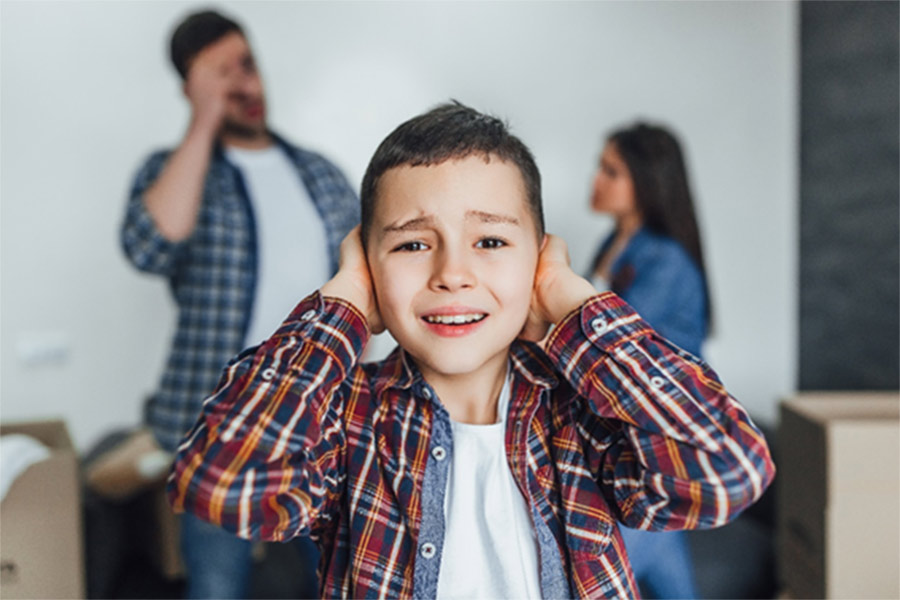
Is it better for them to stay together despite everything? When parents choose not to separate for the sake of their children, they are often trying to shield them from the negative implications that can accompany a divorce. But the truth is that children are very sensitive to what happens at home, and more often than we think, they feel the tension and unhappiness between their parents. This can make them feel confused, anxious, or guilty, thinking that they are the cause of what is happening.

Another important aspect to consider is the impact that a dysfunctional romantic relationship can have on children’s perception of love and relationships in the future. When parents stay together only for the sake of their children, children may grow up thinking that it is normal to be in an unhappy relationship. This can influence their future choices in partners and lead them to repeat unhealthy relationship patterns. In the end, we learn from what we see at home, and if we have not had a model of a healthy relationship, we are unlikely to know what it should be like. This can lead to them learning that life is a constant conflict, that problems are not resolved but ignored, that shouting, blaming, or showing disdain are valid ways to deal with others when problems arise, that affection is not expressed in romantic relationships (because my parents do not do it), or that even if you are not happy with someone, separation is not an option, and you must endure it because that is how relationships are.

Separation with children involved has an emotional impact on everyone, that is true. We cannot prevent children from feeling pain, frustration, or uncertainty when they receive news that implies such a significant change in their lives. However, living in an environment filled with conflict and hostility between their parents, or one where there is an absolute lack of affection and love, can be much more detrimental to their emotional and psychological development than separation. Moreover, some children may feel a certain relief when they are informed of such news, especially those who have lived in a hostile environment for some time.

How to Separate Without Negatively Affecting the Children

When parents make the conscious and respectful decision to separate, they can provide a more stable and healthier environment for their children. Children need to feel loved, secure, and cared for, and a home where parents respect each other, even if they live separately, can offer exactly that.

Furthermore, by separating amicably and cooperatively, we are teaching a model of mature and responsible behaviour in conflict resolution. Children can learn that it is acceptable to end a relationship that no longer works and that it is possible to maintain a respectful relationship with an ex while their love for them remains unshaken. They will learn that, even though it hurts, sometimes difficult decisions must be made to prioritize their well-being.

If you have concluded that separating is the best option for you and your children, it is essential to prioritize communication and emotional support. It is important for children to know what is happening and what will happen to them from now on. Some parents choose not to talk much with their children about the situation because it is delicate, and they think it will make them feel worse. Nothing could be further from the truth: talking to your children about the situation honestly and compassionately can help them process their feelings and concerns and address any doubts they may have. Many children may think that all of this is happening because of them, because they have not behaved well, that maybe their parents will reconcile and get back together… It is essential that we understand how they are interpreting the situation so that we can dispel any false beliefs they may have about it.

After the separation, it is important to try to maintain the children’s routines as much as possible and ensure that communication between the parents is smooth so that the children are not affected or caught in the middle of conflicts and do not have to act as intermediaries.

At what age of the children is it better to separate?

This is a question that is often asked by people facing this dilemma. However, there is no specific age of the children that is better for separation. While it is true that it is a significant life change and can affect them differently depending on their age, deciding to wait until they reach a certain age is the same as staying together to prioritize their well-being, even if it leads to unhappiness. The decision should be based on the individual circumstances of the family and what promotes the well-being of the children and yourselves.

In conclusion, ” I’m not separating for my children” may be a statement filled with good intentions, but it is important to remember that the quality of the relationship between parents has a significant impact on the well-being of the children. Prioritizing a stable, loving, and healthy family environment, whether together or separately, is the best expression of love and responsibility and the best lesson we can teach the youngest members of the family.

If you find yourself in this situation and do not know how to handle it, we can help provide you with the necessary tools for you and your children to navigate such a difficult stage. Remember that you are not alone in this and that you are fighting to give your children and yourself the best possible outcome for everyone.”

Aina Fiol Veny
Psychologist Col. Nº B-02615

Scroll to Top
Privacy Overview

Política de cookies:

Según la Ley 34/2002, de 11 de julio, de Servicios de la Sociedad de la Información y Comercio Electrónico le informamos de que este sitio web usa Cookies para mejorar y optimizar la experiencia del usuario. A continuación encontrará información detallada sobre qué son las “Cookies”, qué tipología utiliza este sitio web, cómo cambiar la configuración de sus cookies, y qué ocurre si las deshabilita.

¿Qué son las cookies?

Una cookie es un fichero que se descarga en su ordenador al acceder a determinadas páginas web. Las cookies permiten a una página web, entre otras cosas, almacenar y recuperar información sobre los hábitos de navegación de un usuario o de su equipo y, dependiendo de la información que contengan y de la forma en que utilice su equipo, pueden utilizarse para reconocer al usuario.

¿Qué tipos de cookies utiliza esta página web?

  • Según la entidad que las gestione, las cookies pueden ser:
  • Cookies propias: Son aquellas que se envían al equipo terminal del interesado desde un equipo o dominio gestionado por el propio editor y desde el que se presta el servicio solicitado por el usuario.
  • Cookies de terceros: Son aquellas que se envían al equipo terminal del usuario desde un equipo o dominio que no es gestionado por el editor, sino por otra entidad que trata los datos obtenidos través de las cookies.

El Sitio Web utiliza tanto cookies propias como de terceros.

  • Según el plazo de tiempo que permanecen activadas:
  • Cookies de sesión: Son un tipo de cookies diseñadas para recabar y almacenar datos mientras el usuario accede a una página web. Se suelen emplear para almacenar información que solo interesa conservar para la prestación del servicio solicitado por el usuario en una sola ocasión (p.ej. una lista de productos adquiridos).
  • Cookies persistentes: Son un tipo de cookies en el que los datos siguen almacenados en el terminal y pueden ser accedidos y tratados durante un periodo definido por el responsable de la cookie, y que puede ir de unos minutos a varios años.

El Sitio Web utiliza tanto cookies persistentes como cookies de sesión.

  • ¿Para qué finalidades pueden ser utilizadas las cookies de la web?
  • Cookies técnicas: Son aquéllas que permiten al usuario la navegación a través de una página web, plataforma o aplicación y la utilización de las diferentes opciones o servicios que en ella existan como, por ejemplo, controlar el tráfico y la comunicación de datos, identificar la sesión, acceder a partes de acceso restringido, recordar los elementos que integran un pedido, realizar el proceso de compra de un pedido, realizar la solicitud de inscripción o participación en un evento, utilizar elementos de seguridad durante la navegación, almacenar contenidos para la difusión de videos o sonido o compartir contenidos a través de redes sociales.
  • Cookies de personalización: Son aquéllas que permiten al usuario acceder al servicio con algunas características de carácter general predefinidas en función de una serie de criterios en el terminal del usuario como por ejemplo serian el idioma, el tipo de navegador a través del cual accede al servicio, la configuración regional desde donde accede al servicio, etc.
  • Cookies de análisis: Son aquéllas que permiten al responsable de las mismas, el seguimiento y análisis del comportamiento de los usuarios de los sitios web a los que están vinculadas. La información recogida mediante este tipo de cookies se utiliza en la medición de la actividad de los sitios web, aplicación o plataforma y para la elaboración de perfiles de navegación de los usuarios de dichos sitios, aplicaciones y plataformas, con el fin de introducir mejoras en función del análisis de los datos de uso que hacen los usuarios del servicio.
  • Cookies publicitarias: Son aquéllas que permiten la gestión, de la forma más eficaz posible, de los espacios publicitarios que, en su caso, el editor haya incluido en una página web, aplicación o plataforma desde la que presta el servicio solicitado en base a criterios como el contenido editado o la frecuencia en la que se muestran los anuncios.
  • Cookies de publicidad comportamental: Son aquéllas que permiten la gestión, de la forma más eficaz posible, de los espacios publicitarios que, en su caso, el editor haya incluido en una página web, aplicación o plataforma desde la que presta el servicio solicitado. Estas cookies almacenan información del comportamiento de los usuarios obtenida a través de la observación continuada de sus hábitos de navegación, lo que permite desarrollar un perfil específico para mostrar publicidad en función del mismo.

Cookies propias

Nombre Dominio Duración
ANnoElGaWR_ psicologiasexologiamallorca.com al día
ZeDOrRxVc psicologiasexologiamallorca.com al día
OPQjcGKa_TCntuSv psicologiasexologiamallorca.com al día
dQ_tKeuinJgZhFWM psicologiasexologiamallorca.com al día
joinchat_views psicologiasexologiamallorca.com al día

Cookies de Terceros

Nombre Descripción Proveedor información
Google Analytics Cookies de Google Analytics. Generan un ID de usuario anónimo, que es el que se utiliza para hacer recuento de cuantas veces visita el sitio un usuario. También registra cuando fue la primera y la última vez que visitó la web. Asimismo, calcula cuando se ha terminado una sesión, origen del usuario, y keywords. Google Ver

¿Qué ocurre si se deshabilitan las Cookies?

Algunas funcionalidades de los Servicios y áreas de este sitio web podrían no funcionar correctamente si se deshabilitan las cookies.

¿Actualizamos nuestra Política de Cookies?

Es posible que actualicemos la Política de Cookies de nuestra página web, por ello le recomendamos revisar esta política cada vez que acceda a nuestro sitio web con el objetivo de estar adecuadamente informado sobre cómo y para qué usamos las cookies.

¿Cómo puede configurar y/o rechazar sus Cookies?

Al clickar en “ENTENDIDO” y continuar en nuestro sitio web, estará consintiendo el uso de las Cookies en las condiciones contenidas en la presente Política de Cookies. Usted como usuario tiene la posibilidad de ejercer su derecho a bloquear, eliminar y rechazar el uso de Cookies, en todo momento, modificando las opciones de su navegador. Por ejemplo:

  • Microsoft Edge: Configuración> Configuración Avanzada> Cookies.

Consulta el soporte de Microsoft o la Ayuda del navegador.

  • Mozilla Firefox: Herramientas> Opciones> Privacidad> Historial> Configuración Personalizada.

Consulta el soporte de Mozilla o la Ayuda del navegador.

  • Google Chrome: Configuración> Mostrar opciones avanzadas > Privacidad> Configuración de contenido.

Consulta el soporte de Google o la Ayuda del navegador.

  • Safari (Apple): Preferencias> Seguridad.

Consulta el soporte de Apple o la Ayuda del navegador.

  • Opera (Opera Software): Configuración > Opciones > Avanzado > Cookies

Consulta el soporte de Opera o la Ayuda del navegador.

Si usa otro navegador, consulte su política de instalación, uso y bloqueo de cookies. No obstante, usando la herramienta www.youronlinechoices.com, podrá encontrar información útil y configurar, proveedor por proveedor, sus preferencias sobre las cookies.

¿Sólo existen cookies?

Puede ser que haya webs que usen otras formas de almacenamiento similar a las cookies pero con más capacidad, como otras formas de almacenamiento local de datos en el equipo del cliente, por ejemplo:

  • LocalStorage y sessionStorage de HTML5: Espacio que la web puede usar en el equipo del usuario. Normalmente borrando el historial de Navegación se pueden borrar.
  • Los «Local Shared Objects» de Flash (el «isolated storage» de Silverlight): Se almacenan dentro de la carpeta de Microsoft de donde tiene el perfil de usuario. Hay que entrar en la carpeta y borrarlo. (Ejemplo: los videos de vimeo).
    Flash sirve para incorporar elementos multimedia en una web, y para ello almacena ficheros en el equipo del usuario.
  • El web beacon sirve para rastrear tu actividad, insertando una mini-imagen de la que ni siquiera te percates. Cuando navegas por la web, se te carga junto con la página, y el servidor de dónde se descarga la foto, registra la hora del acceso, o las veces que has accedido.

Estos archivos son más intrusivos que las cookies, ya que son más complicados de eliminar, guardan más información, y son independientes al navegador que se use. Nosotros no usamos este tipo de almacenamiento.