

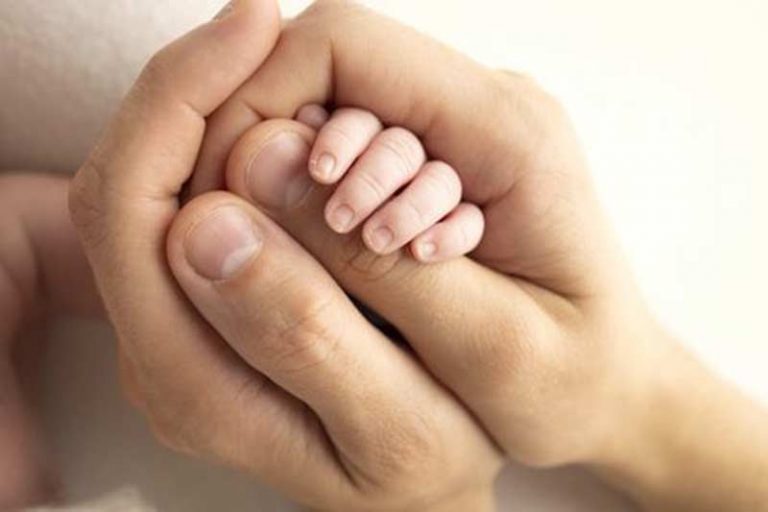
The loss of a pregnancy and/or a wanted baby turns out to be undoubtedly a devastating experience, regardless of the gestational age. This term refers to the loss that occurs in any month of gestation up to the first month of the baby’s life.
Perinatal grief is therefore the grief that accompanies the loss of a child, during gestation, during labour or even after birth. It is often distinguished from gestational grief as this one is associated with the loss of the baby due to the termination of the pregnancy. However, in many cases both terms are used interchangeably.
Undeniably, perinatal loss is a traumatic experience, which is considered unnatural and it causes great suffering both for parents and their immediate environment.
However, in our society, just as there are terms and ways of identifying those who lose their parents or partners as “orphans” or “widowers” respectively, there are no words to refer to fathers or mothers who suffer the loss of their child. This strengthens the invisibility of perinatal bereavement which, for many years, has not been recognized as such. In fact, parents are often confronted by health professionals or their own environment with statements such as “you have to be strong; you can have more children for sure”. Moreover, they are under great pressure to get over it and look for a new pregnancy as soon as possible, with advice such as “what you have to do is not to think about it and have another child as soon as possible” or “life goes on”.
In fact, there seems to be a social distinction depending on when the loss occurs. If the loss occurs after the baby is born, there is more social acceptance, as if only in this case it is recognized as a full-fledged bereavement. However, when the loss occurs during pregnancy or childbirth, there is no such social recognition; it even seems that the parents should get over it more quickly, as they are not given the legitimacy to grieve.
Moreover, as an example of the other side of the coin, sometimes those close to them avoid talking about it or make efforts trying to act “normally” in order not to cause greater suffering. This often has the opposite effect on the parents, as not only they do feel discomfort, but it also masks their grief and they are even forced to live their loss in silence. Their feelings of sadness, insecurity and hopelessness are then intensified as they find themselves misunderstood, judged and with no space to share their pain.
Grief is a normal necessary process of coping with grief and all the feelings that arise after the loss of our loved ones.
However, in this scenario, invisibility and lack of social recognition make it difficult for this grieving process to take place.
We must bear in mind that the failure to mourn their children can become the trigger for emotional disorders such as depression or anxiety and even post-traumatic stress disorder.
Perinatal grief symptoms
At first, parents often experience fear, sense of unreality and hopelessness, together with the belief that they will never get over it. In addition, they usually try to find an explanation for what happened, although in most cases there are no clear answers.
Guilt also comes from the false perception that they could have done something to prevent this happening. They also tend to show difficulty to manage their daily life, insomnia, loss of appetite or irritability.
Overall, it can be said that the loss of a child affects how we think, feel and act. In addition to the emotions and beliefs mentioned above, parents often experience the following symptoms:
| Physical symptoms | Emotional symptoms | Cognitive symptoms | Behavioural symptoms |
| •Breathing difficulties+ feeling of emptiness •Uncontrollable crying •Nightmares | •Loss of interest •Difficulties in experiencing pleasure (anhedonia) •Sadness and loneliness •Frustration and anger •Feeling of misunderstanding / abandonment | •Denial •Difficulties in concentrating and disorientation •Memory loss •Intrusive negative thoughts •Disorganized thinking | •Detachment •Avoidance behaviours • Isolation •Hyperactivity |
Within the couple, the deep sense of powerlessness is shared, that appears together with guilt, frustration and even fear of not being able to have more children in the future.
In this scenario, the pregnant mother tends to feel guilty and responsible for the loss, while her partner experiences this reality with great impotence and frustration, although most of the times his/her loss is placed in second position and it is not given the importance it deserves.
Perinatal grief stages
In relation to the symptoms of perinatal grief, the following stages along the process can be distinguished:
- Shock-denial: there is a sense of unreality and disbelief (“this cannot be true”), confusion, fear and irritability. Sometimes you think you hear the baby crying or feel the baby kicking in your tummy.
- Anger: once you recognize what has happened, you feel anger, helplessness and frustration, as well as the need to look for explanations and blame.
- Bargaining: in order to cope with what has happened, you negotiate with reality. You experience grief, guilt and uncertainty. For example, you investigate how to prevent miscarriages even though you have no real control over it.
- Depression or emotional pain: this phase is characterized by the appearance of deep sadness and nostalgia, as well as the belief that they did not deserve to be parents or, on the other hand, that they deserve to be punished.
- Acceptance: they come to terms with the loss and the pain that will always be present and, at the same time, they begin to face the future with the absence of their child.
These stages are not linear and can be experienced in different order or even some of them may not take place and others may be experienced with greater or lesser intensity.
We must bear in mind that the intensity and the experience of each grief process depends on our personal history and our resources and coping strategies. Furthermore, despite the fact that these stages coincide with those that take place in other mourning processes, the thick veil that is established at a social and health care levels makes it difficult for parents to grieve, as they perceive a lack of empathy, understanding and support.
For a better understanding; in order to go deeper into this subject, it may be useful to read other sections in our blog that are focused on the grieving process in other scenarios, such as the loss of a partner.
How to deal with perinatal grief?
It is necessary to understand that even if the parents have not “met” their child, an attachment relationship has already been forged from the moment they are aware that a baby is on the way.
For this reason, people going through this traumatic experience need to have their loss acknowledged and their feelings validated. It is precisely this factor that will make the difference between grieving in a healthy way and grieving becoming both entrenched and complicated. Indeed, perinatal loss marks a before and after in the life experience and it requires accompaniment along the mourning process.
It should be borne in mind that grieving processes are individual, as each person may need to express, communicate and cope with their grief in a different way. Moreover, they do not follow a predictable course as there is no magic wand to make all the feelings accompanying the loss disappear. Each family needs its own time to grieve, with no set time frame.
There is, therefore, no right or wrong way to deal with grief. Each person deals with it with the resources available to them and it is therefore recommended to find support from the appropriate professionals.
Both parents experience the loss and need to receive both individual and couple support as they work through their own grief. Therefore, it can be comforting to seek out support groups where they can share their experience and feel understood.
In addition, parents can turn to psychotherapists who are specialized in grief and loss. Cognitive-Behavioral therapy is one of the possible approaches. It is actually very useful both to validate their emotions and to develop strategies that allow them to manage the maelstrom of emotions and thoughts that assail them. Indeed, early interventions and emotional support will help to cut down the anxiety and the concerns that parents may have about future pregnancies.
Throughout the process, it is especially important not only to find a space to express themselves but also to have been able to maintain contact, to say goodbye to their baby and even to create memories with their baby – whether through photos or whatever they need.
Finally, we cannot forget that pregnancy loss also affects siblings. Younger children may not understand what has happened although they will perceive some changes in their parents while older children may begin to experience feelings of loss so it is important to take this into account in order to offer them the support they need.
If you have seen yourself reflected in this article or if you are currently going through a bereavement with difficulties and emotions that you do not know how to manage, do not hesitate to contact us.
Bibliographic references
Fernández-Sola, C., Camacho-Ávila, M., Hernández-Padilla, J. M., Fernández-Medina, I. M., Jiménez-López, F. R., Hernández-Sánchez, E., Conesa-Ferrer, M. B., & Granero-Molina, J. (2020). Impact of Perinatal Death on the Social and Family Context of the Parents. International journal of environmental research and public health, 17(10), 3421. https://doi.org/10.3390/ijerph17103421
Kersting, A., & Wagner, B. (2012). Complicated grief after perinatal loss. Dialogues in clinical neuroscience, 14(2), 187–194. https://doi.org/10.31887/DCNS.2012.14.2/ akersting
Wool, C., & Catlin, A. (2019). Perinatal bereavement and palliative care offered throughout the healthcare system. Annals of palliative medicine, 8(Suppl 1), S22–S29. https://doi.org/10.21037/apm.2018.11.03
Laura N. Roza Amengual
Psychologist B-02389