
English banner

THE DANGER OF DIAGNOSTIC LABELS

“I have an OCD”, “He changes his mind every day, he is very bipolar…”. Have you ever heard anything like that? We have all heard statements like these at some point or may even have said them. But do we really know what we are referring to when we use those labels? Are we aware of how this statement can affect the person we are referring to? The answer is usually no. So, we may be labelling someone who is simply scrupulous or very neat as OCD, or someone who may be experiencing an irritable mood because he/she is having a hard day as bipolar.

Consequences of the use of diagnostic labels at the professional level

When mental health professionals use diagnostic labels, we are giving a name to a series of signs and symptoms that a person suffers from. This labeling helps us to classify a person with a specific problem and facilitates our professional work in some ways: it allows us to study these psychopathologies with greater scientific rigor, facilitates the development of standardized assessment instruments and intervention protocols, simplifies the exchange of information between professionals, etc. On a personal level, this labelling helps in some cases to make the person more aware of his or her problems, to understand them in greater depth and to adhere better to the proposed treatment.
In order to carry out this labelling work, there are different manuals that make an extensive classification of diagnostic categories in mental health. Currently, the two most widely used manuals are the DSM – 5 (Diagnostic and Statistical Manual of Mental Disorders, APA) and the ICD – 11 (International Classification of Diseases, WHO). From the first editions of these manuals to the current ones, there have been many changes regarding the approach to the different categories and they have been defined more and more thoroughly thanks to the results obtained from scientific research.
Even so, these manuals are not exempt from criticism. Without going any further, the publication of the DSM-5 raised much controversy regarding the reliability and validity of some proposed diagnostic categories (Allsopp, Read, Corcoran, & Kinderman, 2019). The misuse of these diagnostic categories can lead us to psychopathologize problems of everyday life or to make an incorrect diagnosis, running the risk of proposing a type of intervention that is useless or even harmful to the person.

Consequences of the use of diagnostic labels at the social level.

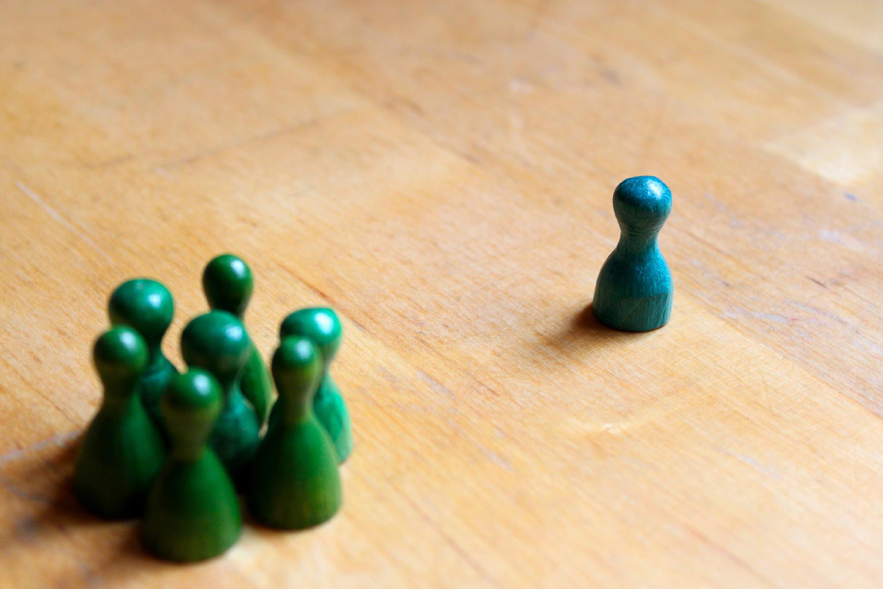
If the use of these categories among professionals, who have more knowledge about how mental health works, is already risky, their use by the general population can also be dangerous. To begin with, most people who use labels such as OCD, bipolar or schizophrenia do not know exactly what they are referring to and rely on exceptional behaviours that have little to do with the complexity of such disorders. By doing so, we may be labelling someone as having a serious problem that does not really have. On the other hand, even if the person has such a problem, the excessive and exaggerated use of such labels can lead to the person being trapped within the diagnosis or being stigmatized by his or her environment. In both cases, we are reducing this person to a simple category, without considering his or her individual experience.
We may look at an example of being trapped inside the label: “I am X (we can write down any label here). I am like this, and I can’t change.” While it is true that when we begin to accept ourselves, we make good progress, we have to be careful because this radical “acceptance” prevents us from being aware that some aspects can be modulated and that it would be more adaptive for ourselves and for the people around us if we would do it. For example, I can accept that I am a High Sensitive Person (HSP) and that I feel emotions more intensely than my partner, but this does not mean that I cannot learn strategies to regulate my emotions more effectively. If I get stuck in the label, I may believe that I cannot or do not have to work through those difficulties when they arise, which can produce me a lot of suffering when my emotions get out of hand and/or a lot of discomfort on an interpersonal level because it is very difficult for the people around me to accept some of my behaviours.
Finally, it can also happen that, by labelling ourselves as having a problem that we do not have, we are unconsciously underestimating the importance of the problem, or we seem to make fun of it. For example, when I say that I have OCD because I like things to be tidy, I am not considering the discomfort that a person who really suffers from this disorder may feel when he or she hears me make that statement. We would not say in front of a blind person that I am blind because I cannot see a sign well from a distance.
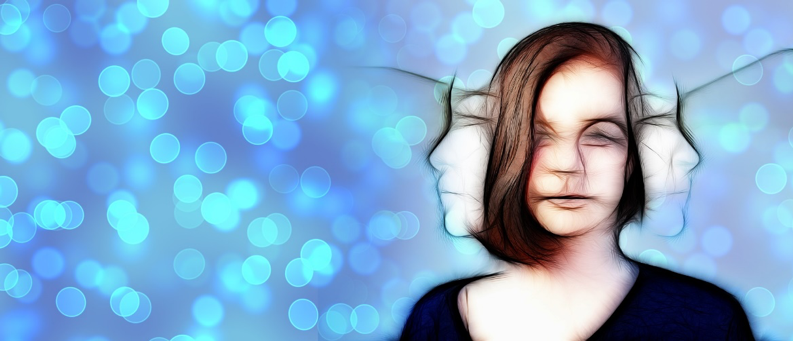
Keys to NOT misusing diagnostic labels:

  • Do not “diagnose” the people around you or yourself. Leave that task to mental health professionals, who will do it if they consider it necessary and they will do it having knowledge about the subject and more rigorously. Labelling a person with this kind of problems (whether it is true or not) can creates a lot of suffering. On the other hand, labelling ourselves will not always be necessary and can cause us to get stuck in the diagnosis, as explained above. More than naming the problem, what interests us the most is to describe it and to know what we should do to feel better about ourselves.
  • Change the verb “to be” to the verb “to have”. The simple use of “is” versus “has” is revealing of how we reduce the person to his or her disorder, as if there was nothing beyond it. Instead of saying “Mary is depressive,” you can say “Mary has depression.”
  • Do not make fun of people who have a psychopathological diagnosis. Such a diagnosis always involves great suffering or interference in the person’s life.
  • Do not believe everything that is said in the news or the stories you hear. “He killed a person, but of course, he was schizophrenic” or “John has schizophrenia, it’s dangerous to be left alone with him.” It may happen that a person with a psychological disorder ends up committing a crime, but the truth is that it happens much less frequently than we are led to believe by the biases of the media or our stereotypes. People with no apparent psychological problem commit criminal acts daily and we do not be afraid of everyone indiscriminately, do we?
  • If you have received a diagnosis, do not give up. While it is true that a very important is accepting what is happening to you, it is also important that you get involved in making the adjustments that will allow you to live your life in a more satisfying way.
  • If you have received a diagnosis, you can use it to your advantage, to know yourself better and to know what action plan will help you to overcome the difficulties.
  • And finally, remember that the problem you are suffering from is a part of you, but it does not define you as a person. For example, you are not bipolar, you are a person who has a bipolar disorder, with your own way of thinking, feeling and acting, and with your own life experiences, which may be very different from those of another person who also suffers from the same disorder. Remember that you are not your diagnosis.

References:
Allsopp, K., Read, J., Corcoran, R., & Kinderman, P. (2019). Heterogeneity in psychiatric diagnostic classification. Psychiatry Research, 279, 15 – 22.
American Psychiatric Association (2013). Diagnostic and statistical manual of mental disorders (5th ed.). Arlington, VA: Author.
World Health Organization. (2019). International statistical classification of diseases and related health problems (11th ed.).

Aina Fiol Veny
Psychologist Col. Nº B-02615

Scroll to Top
Privacy Overview

Política de cookies:

Según la Ley 34/2002, de 11 de julio, de Servicios de la Sociedad de la Información y Comercio Electrónico le informamos de que este sitio web usa Cookies para mejorar y optimizar la experiencia del usuario. A continuación encontrará información detallada sobre qué son las “Cookies”, qué tipología utiliza este sitio web, cómo cambiar la configuración de sus cookies, y qué ocurre si las deshabilita.

¿Qué son las cookies?

Una cookie es un fichero que se descarga en su ordenador al acceder a determinadas páginas web. Las cookies permiten a una página web, entre otras cosas, almacenar y recuperar información sobre los hábitos de navegación de un usuario o de su equipo y, dependiendo de la información que contengan y de la forma en que utilice su equipo, pueden utilizarse para reconocer al usuario.

¿Qué tipos de cookies utiliza esta página web?

  • Según la entidad que las gestione, las cookies pueden ser:
  • Cookies propias: Son aquellas que se envían al equipo terminal del interesado desde un equipo o dominio gestionado por el propio editor y desde el que se presta el servicio solicitado por el usuario.
  • Cookies de terceros: Son aquellas que se envían al equipo terminal del usuario desde un equipo o dominio que no es gestionado por el editor, sino por otra entidad que trata los datos obtenidos través de las cookies.

El Sitio Web utiliza tanto cookies propias como de terceros.

  • Según el plazo de tiempo que permanecen activadas:
  • Cookies de sesión: Son un tipo de cookies diseñadas para recabar y almacenar datos mientras el usuario accede a una página web. Se suelen emplear para almacenar información que solo interesa conservar para la prestación del servicio solicitado por el usuario en una sola ocasión (p.ej. una lista de productos adquiridos).
  • Cookies persistentes: Son un tipo de cookies en el que los datos siguen almacenados en el terminal y pueden ser accedidos y tratados durante un periodo definido por el responsable de la cookie, y que puede ir de unos minutos a varios años.

El Sitio Web utiliza tanto cookies persistentes como cookies de sesión.

  • ¿Para qué finalidades pueden ser utilizadas las cookies de la web?
  • Cookies técnicas: Son aquéllas que permiten al usuario la navegación a través de una página web, plataforma o aplicación y la utilización de las diferentes opciones o servicios que en ella existan como, por ejemplo, controlar el tráfico y la comunicación de datos, identificar la sesión, acceder a partes de acceso restringido, recordar los elementos que integran un pedido, realizar el proceso de compra de un pedido, realizar la solicitud de inscripción o participación en un evento, utilizar elementos de seguridad durante la navegación, almacenar contenidos para la difusión de videos o sonido o compartir contenidos a través de redes sociales.
  • Cookies de personalización: Son aquéllas que permiten al usuario acceder al servicio con algunas características de carácter general predefinidas en función de una serie de criterios en el terminal del usuario como por ejemplo serian el idioma, el tipo de navegador a través del cual accede al servicio, la configuración regional desde donde accede al servicio, etc.
  • Cookies de análisis: Son aquéllas que permiten al responsable de las mismas, el seguimiento y análisis del comportamiento de los usuarios de los sitios web a los que están vinculadas. La información recogida mediante este tipo de cookies se utiliza en la medición de la actividad de los sitios web, aplicación o plataforma y para la elaboración de perfiles de navegación de los usuarios de dichos sitios, aplicaciones y plataformas, con el fin de introducir mejoras en función del análisis de los datos de uso que hacen los usuarios del servicio.
  • Cookies publicitarias: Son aquéllas que permiten la gestión, de la forma más eficaz posible, de los espacios publicitarios que, en su caso, el editor haya incluido en una página web, aplicación o plataforma desde la que presta el servicio solicitado en base a criterios como el contenido editado o la frecuencia en la que se muestran los anuncios.
  • Cookies de publicidad comportamental: Son aquéllas que permiten la gestión, de la forma más eficaz posible, de los espacios publicitarios que, en su caso, el editor haya incluido en una página web, aplicación o plataforma desde la que presta el servicio solicitado. Estas cookies almacenan información del comportamiento de los usuarios obtenida a través de la observación continuada de sus hábitos de navegación, lo que permite desarrollar un perfil específico para mostrar publicidad en función del mismo.

Cookies propias

Nombre Dominio Duración
ANnoElGaWR_ psicologiasexologiamallorca.com al día
ZeDOrRxVc psicologiasexologiamallorca.com al día
OPQjcGKa_TCntuSv psicologiasexologiamallorca.com al día
dQ_tKeuinJgZhFWM psicologiasexologiamallorca.com al día
joinchat_views psicologiasexologiamallorca.com al día

Cookies de Terceros

Nombre Descripción Proveedor información
Google Analytics Cookies de Google Analytics. Generan un ID de usuario anónimo, que es el que se utiliza para hacer recuento de cuantas veces visita el sitio un usuario. También registra cuando fue la primera y la última vez que visitó la web. Asimismo, calcula cuando se ha terminado una sesión, origen del usuario, y keywords. Google Ver

¿Qué ocurre si se deshabilitan las Cookies?

Algunas funcionalidades de los Servicios y áreas de este sitio web podrían no funcionar correctamente si se deshabilitan las cookies.

¿Actualizamos nuestra Política de Cookies?

Es posible que actualicemos la Política de Cookies de nuestra página web, por ello le recomendamos revisar esta política cada vez que acceda a nuestro sitio web con el objetivo de estar adecuadamente informado sobre cómo y para qué usamos las cookies.

¿Cómo puede configurar y/o rechazar sus Cookies?

Al clickar en “ENTENDIDO” y continuar en nuestro sitio web, estará consintiendo el uso de las Cookies en las condiciones contenidas en la presente Política de Cookies. Usted como usuario tiene la posibilidad de ejercer su derecho a bloquear, eliminar y rechazar el uso de Cookies, en todo momento, modificando las opciones de su navegador. Por ejemplo:

  • Microsoft Edge: Configuración> Configuración Avanzada> Cookies.

Consulta el soporte de Microsoft o la Ayuda del navegador.

  • Mozilla Firefox: Herramientas> Opciones> Privacidad> Historial> Configuración Personalizada.

Consulta el soporte de Mozilla o la Ayuda del navegador.

  • Google Chrome: Configuración> Mostrar opciones avanzadas > Privacidad> Configuración de contenido.

Consulta el soporte de Google o la Ayuda del navegador.

  • Safari (Apple): Preferencias> Seguridad.

Consulta el soporte de Apple o la Ayuda del navegador.

  • Opera (Opera Software): Configuración > Opciones > Avanzado > Cookies

Consulta el soporte de Opera o la Ayuda del navegador.

Si usa otro navegador, consulte su política de instalación, uso y bloqueo de cookies. No obstante, usando la herramienta www.youronlinechoices.com, podrá encontrar información útil y configurar, proveedor por proveedor, sus preferencias sobre las cookies.

¿Sólo existen cookies?

Puede ser que haya webs que usen otras formas de almacenamiento similar a las cookies pero con más capacidad, como otras formas de almacenamiento local de datos en el equipo del cliente, por ejemplo:

  • LocalStorage y sessionStorage de HTML5: Espacio que la web puede usar en el equipo del usuario. Normalmente borrando el historial de Navegación se pueden borrar.
  • Los «Local Shared Objects» de Flash (el «isolated storage» de Silverlight): Se almacenan dentro de la carpeta de Microsoft de donde tiene el perfil de usuario. Hay que entrar en la carpeta y borrarlo. (Ejemplo: los videos de vimeo).
    Flash sirve para incorporar elementos multimedia en una web, y para ello almacena ficheros en el equipo del usuario.
  • El web beacon sirve para rastrear tu actividad, insertando una mini-imagen de la que ni siquiera te percates. Cuando navegas por la web, se te carga junto con la página, y el servidor de dónde se descarga la foto, registra la hora del acceso, o las veces que has accedido.

Estos archivos son más intrusivos que las cookies, ya que son más complicados de eliminar, guardan más información, y son independientes al navegador que se use. Nosotros no usamos este tipo de almacenamiento.